Tushoply
A cross-border marketplace that feels local in fourteen countries.
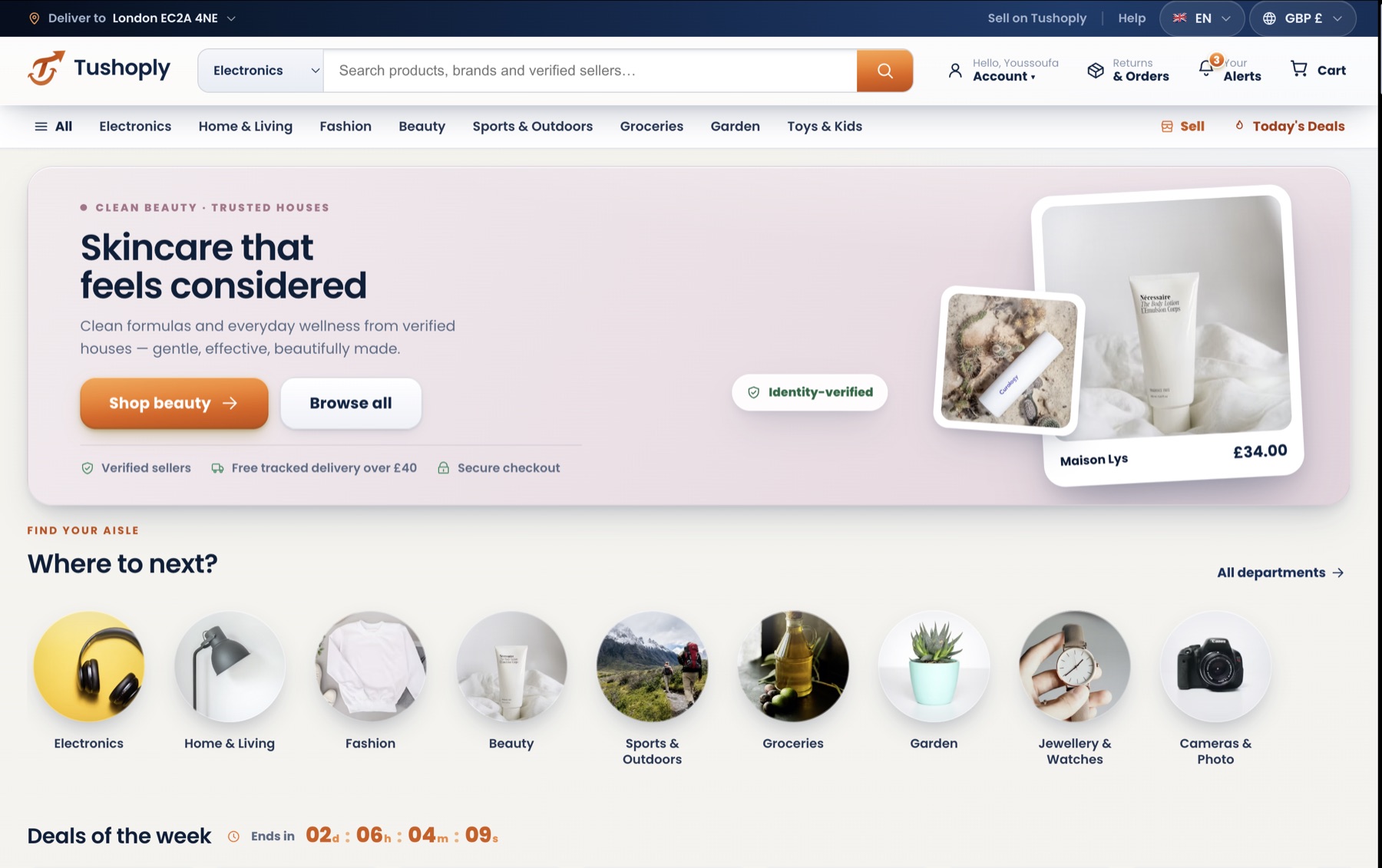
A cross-border marketplace that feels local in fourteen countries.
Tushoply had to feel native everywhere — currency, trust signals and checkout reading as local in fourteen territories at once. We rebuilt it from the data model up and made it move like a single, fast room rather than fourteen bolted-together stores.
What made it hard.
One catalogue, fourteen sets of expectations. Pricing, payment methods, delivery promises and trust cues all had to localise without forking the product into fourteen apps — and the old stack buckled under the catalogue size.
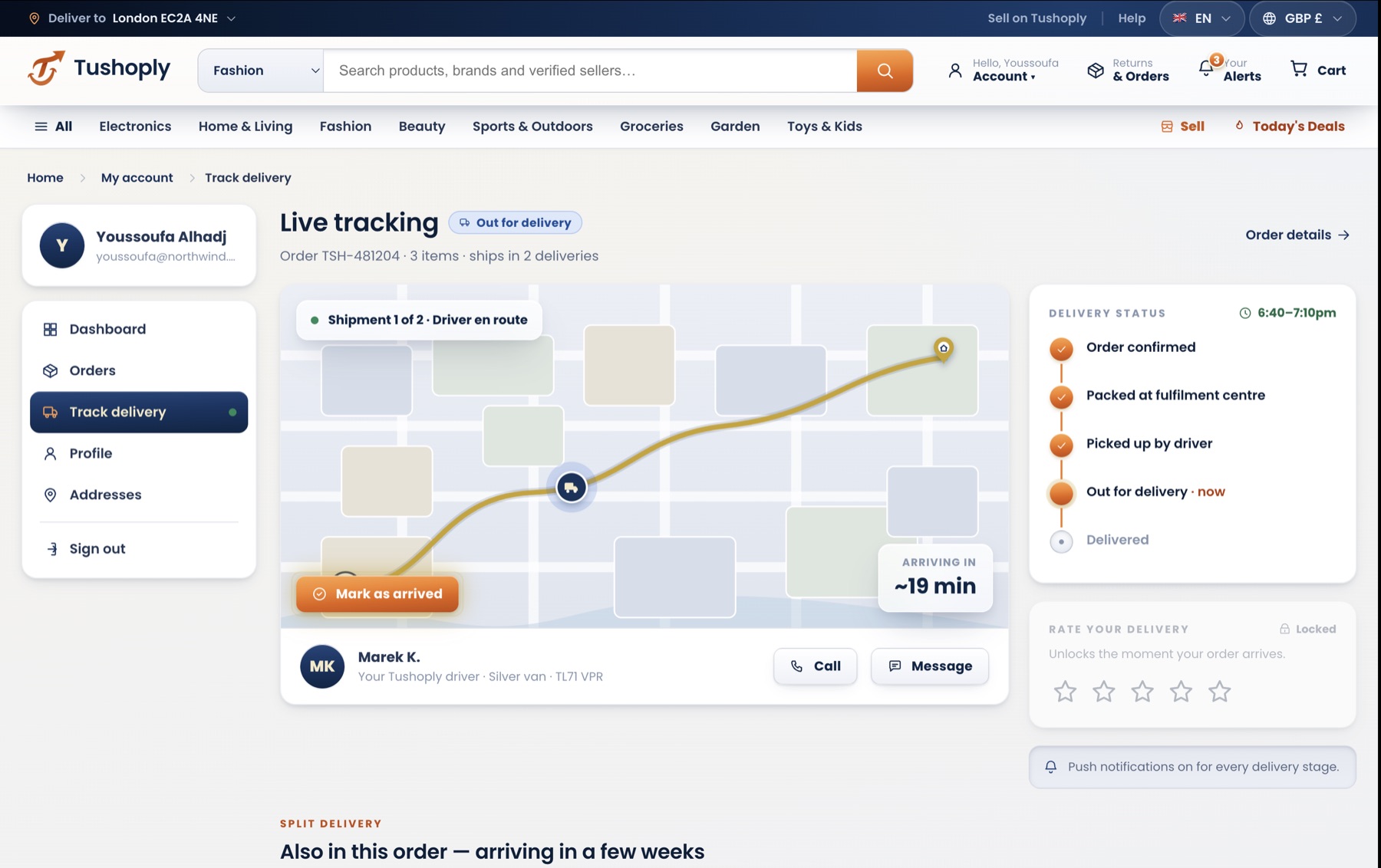
From the hard part, forward.
Map the real model
We modelled territory, currency, trust and fulfilment as first-class data — not UI conditionals — so localisation became a query, not a fork.
Rebuild the spine
A new catalogue and pricing engine on Postgres, with edge caching, so search and checkout stayed sub-second at fourteen-market scale.
Localise the feel
Checkout, payment methods and delivery promises adapt per market — the product reads as local everywhere without duplicate code.
Ship & measure
Continuous deploys with live dashboards on conversion, latency and error budgets, market by market.
What shipped, in numbers.
The parts we’re proud of.
Localised checkout
Currency, tax, payment methods and delivery promises resolve per market from one engine.
Real-time tracking
Live ETAs and split-shipment status, kept fast with edge caching and websockets.
One catalogue
A unified data model serves fourteen storefronts without duplicating the product.